






Vilans at ICIC26: Integrated Care for All – Promoting Health and Wellbeing Through Diversity
Gepubliceerd op:
Good collaboration in networks is becoming increasingly important - although it is not always easy in practice. For Vilans, supporting networks and strengthening integrated care has been a key focus for many years.
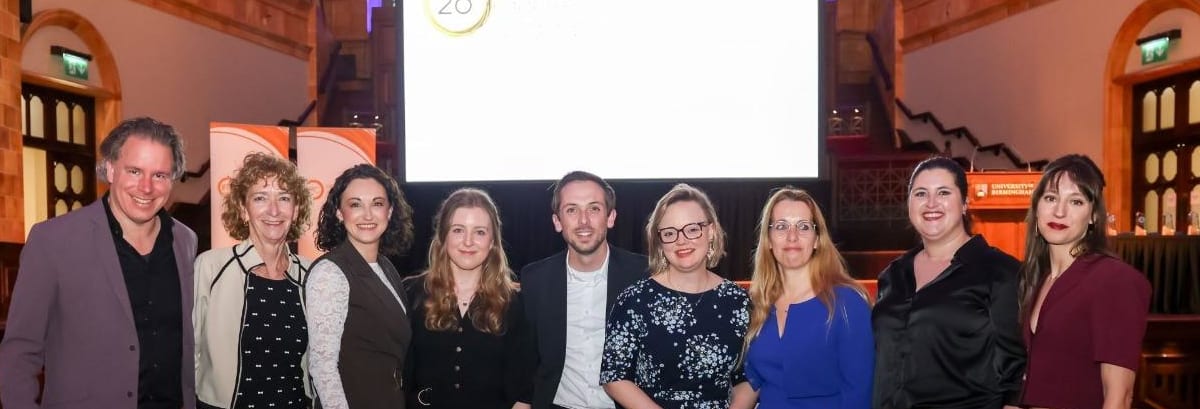
Recently, several colleagues were invited to share their knowledge and experiences at the International Conference on Integrated Care (ICIC26) in Birmingham. The conference brought together researchers, professionals, policymakers and people with lived experience from around the world, all working towards one common goal: organising care and support so that it better fits people’s lives.
What did Vilans contribute?
Vilans contributed to several workshops and sessions, with a strong focus on collaboration with caring communities. Lian Stouthard, Marloes Berkelaar, Sander Merkus led a workshop on how organisations can work with communities in a more equal way. The session explored which knowledge, examples and practical approaches are needed to collaborate with caring communities.
A key message was that effective collaboration is not about taking over, but about connecting to what already exists. By building on the strengths of communities, residents and informal networks, care can become more aligned with daily life.
Vilans also contributed to a Special Interest Group session on community-led and community-enabled integrated care. In this international collaboration, participants work together throughout the year to exchange knowledge and experiences. In the coming period, the focus will be on collecting concrete examples and case studies to better understand how community-based approaches can be applied in practice.
What stood out?
A recurring insight during the conference is how difficult it is to move away from system-based thinking. Although many sessions focused on community-led or community-enabled integrated care, in practice the starting point often remains the existing care system.
We see that many initiatives still revolve around what the system offers, rather than what people and communities actually need.
Lian Stouthard, Researcher
This highlights how challenging the transition is. At the same time, it shows that there is growing awareness that care should be organised differently - starting from people and their environments rather than from organisational structures. Another important insight is the need to truly place citizens and their daily lives at the centre.
Good integrated care starts with really putting the citizen and their daily life at the centre.
Marloes Berkelaar, Advisor
Examples shared at the conference showed that this means starting with people first, and only then organising collaboration, governance and structures around their needs. This requires professionals and organisations to adopt different perspectives, use different language and recognise diversity in people’s backgrounds and situations.
Looking ahead
Looking to the future, the direction for integrated care is becoming increasingly clear.
We are moving from organising integrated care for the citizen to organising it with the citizen.
Lian Stouthard, Researcher
During the conference, the voice of patients and their network was in the background. I think/hope that in the coming years it will become even more central.
Beaudine van den Berg, Researcher
This requires not only new forms of collaboration, but also a different mindset. Professionals and organisations need to move beyond system logic and create space for the knowledge, experience and capabilities of citizens and communities.
It is a complex transition, but one that is essential to ensure that care and support truly fit people’s lives.
What does this mean for practice?
ICIC26 once again demonstrated the value of international exchange. Many of the challenges that countries face - such as ageing populations, rising costs and workforce shortages - are similar.
At the same time, the conference offered practical examples of how systems are responding differently. From new ways of supporting people after hospital discharge to broader approaches to palliative care, participants shared both successes and lessons learned. These insights are directly relevant for the Netherlands.
Solutions do not need to be unique if the challenges are shared. Learning from other countries helps to accelerate change and avoid repeating the same mistakes.
Lian Stouthard, Researcher