







Vilans at ISG 2026: Empowering Aging with Gerontechnology
Gepubliceerd op:
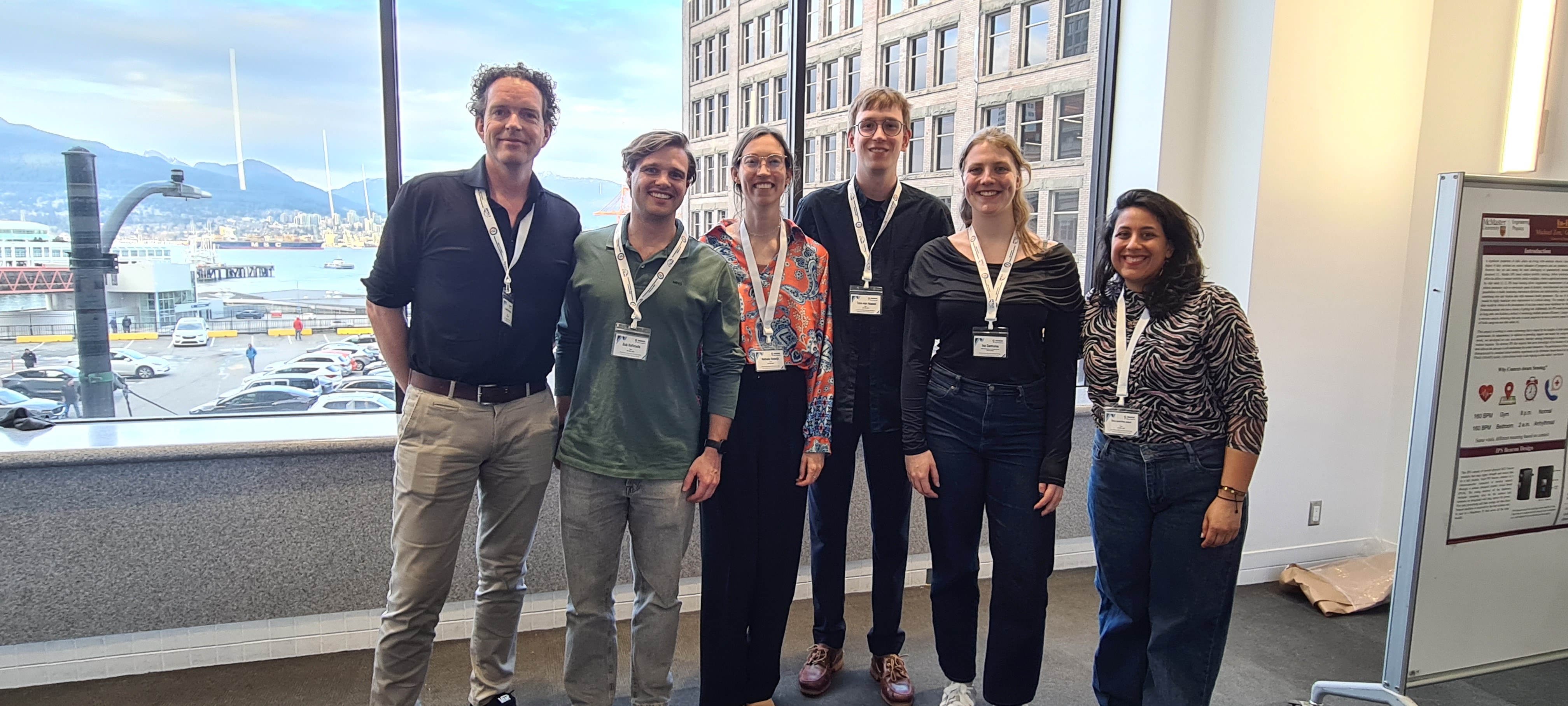
In March 2026, Vilans participated in the 15th World Conference of the International Society for Gerontechnology (ISG) in Vancouver, Canada. This international conference brings together researchers, policymakers, care professionals, designers and technology developers to explore how technology can support health, wellbeing and independence in later life. The central theme of ISG 2026 was Empowering aging with gerontechnology.
Vilans contributed with twelve presentations and symposia, covering a broad range of topics related to digital care, ageing and implementation in long-term care. Across these contributions, the focus was on translating technological developments into solutions that can be meaningfully embedded in everyday care practice.
Value-driven use of technology in care practice
New care technologies are introduced within contexts where stakeholders may hold different expectations. In practice, such care technologies face the challenge of aligning perceived value for older adults, informal caregivers and care professionals.
Researcher Tom van Hoesel presented collaborative research work on technology for fall prevention and the use of value assessment methods, including the GUIDE‑13 rapid literature review framework. These approaches help researchers, policy makers and care organisations evaluate whether a technology aligns with the needs of older adults, care professionals and organisational contexts before large-scale implementation. By focusing on overarching values rather than technological potential alone, this work supports more informed decision‑making and contributes to sustainable innovation in long‑term care. Want to learn more about value assessment methods at Vilans? Take a look at the Value Palette Framework. Or if you are interested in research on fall prevention technologies, reach out to Tom!
Personalisation and social robotics in elderly care
Another theme Vilans presented at ISG 2026 was personalisation—the ability of technologies to adapt to individual needs, preferences, and contexts of older people. Vilans colleague Bob Hofstede presented preliminary insights from his scoping review into personalised communication for socially assistive technologies. Furthermore, together with Henk Herman Nap and Sima Ipakchian Askari, he organised a symposium on social robots in care for older adults. Hereby, Vilans collaborated with researchers from the Expertise Center Dementia Technology from Eindhoven University of Technology and from the university of Northern British Columbia. Social robots are often presented as promising tools to address loneliness, support in activities of daily life, and provide emotional comfort. At the same time, their use raises complex questions related to ethics, communication, expectations, and implementation. During the symposium, participants explored topics such as:
- how users perceive and interpret robot behaviour,
- the risk of deception or misunderstandings,
- communication breakdowns between humans and robots,
- and the concept of an 'emotional passport' to better align robotic behaviour with individual users.
By openly addressing both the potential and the limitations of social robots, the sessions contributed to a more nuanced and evidence‑informed debate about their role in care for older adults.
Gerontechnology and dementia care
Dementia care was another key focus area of Vilans where the use of care technologies is rapidly evolving but requires careful examination. Sima Ipakchian Askari presented research on the use of a cuddle robot with heartbeat feedback for people living with dementia. The research work examined how the robot was experienced in real care settings, what effects it had on wellbeing and behaviour, and how care professionals and families perceived its use. These insights are essential for understanding not only whether such technologies work, but how and under which conditions they can be meaningfully integrated into care routines.
Supporting informal caregivers through digital solutions
The importance of involving informal caregivers in digital care innovation was highlighted in a joint presentation and Symposia by Nathalie Stolwijk and Sima Ipakchian Askari. They shared insights from the DemiCare+ project, which focuses on strengthening resilience among informal caregivers of people with dementia.
The presentation demonstrated how informal caregivers were actively involved throughout the development process, from theoretical models to concrete app functionalities. This co-design approach contributes to digital solutions that better fit the realities of caregiving and support collaboration between formal and informal care.
Speech‑driven reporting in long-term care
Digital documentation was addressed in a presentation by Isa Dantuma, who shared research the added value of speech‑driven reporting in elderly care. The study explored how speech-to-text applications can reduce administrative burden for care professionals and support more efficient work processes through a time reduction, high transcription quality and changes in workflow. By freeing up time for direct interaction with clients, speech‑driven reporting technologies may contribute to better quality of care and a decrease in experiences work pressure among professionals.
From innovation to implementation
Although the contributions from Vilans covered a wide range of themes in care technologies, a shared conclusion emerged: technology only empowers ageing when it is successfully implemented in practice. Sustainable and meaningful implementation of care technologies requires attention to organisational and individual context, including organisational culture, users’ routines and needs, ethical considerations, and stakeholder engagement.
Collaboration and international exchange
The contributions to ISG 2026 were made possible through collaboration between researchers from Vilans, Eindhoven University of Technology and the Expertise Centre for Dementia & Technology. This collaboration reflects the close connection between scientific research, technological innovation and care practice.
Vilans looks back on ISG 2026 as a valuable opportunity to share Dutch expertise internationally and to learn from developments and research from other countries in the field of gerontechnology.
Contributors from Vilans and partners
- Tom van Hoesel – fall prevention and value‑driven technology assessment
- Bob Hofstede – personalisation in care technology and social robotics, treasurer ISG
- Sima Ipakchian Askari – gerontechnology in dementia care; DemiCare+, Secretary General of the Dutch and Flemish chapter of ISG
- Nathalie Stolwijk – digital support for informal caregivers; DemiCare+
- Isa Dantuma – speech‑driven reporting in long‑term care
- Ella‑Jenna (Jiayuan) Chen (ECDT) – personalised communication and social robotics
- Fan Wang (ECDT) – context‑aware social robotics
- Henk Herman Nap – professor of digital care, Executive Committee / Board ISG, President of the Dutch and Flemish chapter of ISG, Eindhoven University of Technology: symposium on social robots in care for older adults and chaired multiple sub-sessions.
Vilans