
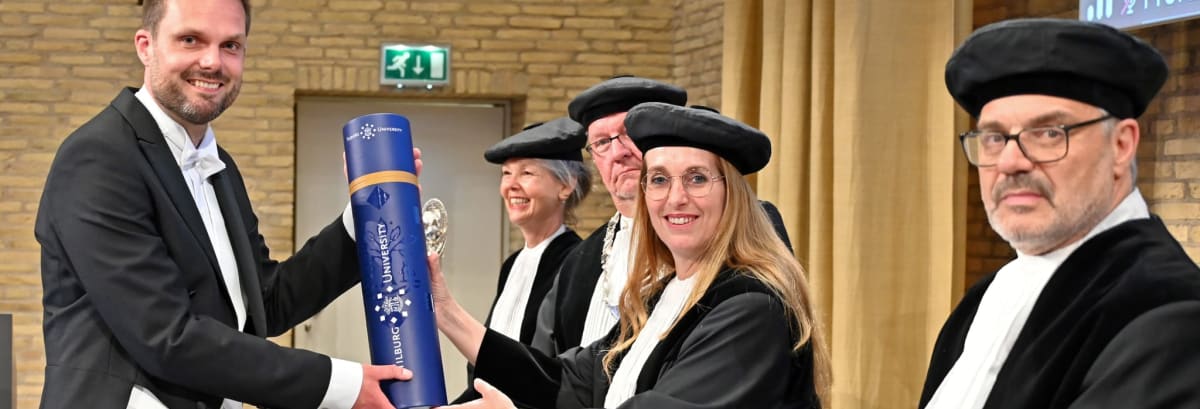






Nick Zonneveld: 'In care networks, embrace differences rather than eliminate them'
Published on: 29-06-2026
Successful collaboration in care networks is not achieved by making organisations more alike, but by recognising and connecting their differences through appropriate governance. That is the central conclusion of Nick Zonneveld, researcher at Vilans, in his PhD thesis 'The Value of Different Values: Exploring the Role of Values in Interorganizational Care Networks'. He obtained his doctorate from Tilburg University on 23 June 2026.
Values shape collaboration
Zonneveld's research focuses on the role of values in collaboration between organisations in care networks. 'By values, we mean what people and organisations consider important, desirable and worth striving for in their work and in the care they provide. A hospital, for example, may prioritise efficiency and medical treatment, while a municipality focuses more on supporting people to live independently. Shared values can strengthen collaboration, but differences in values may also create tensions. Those tensions make collaboration more challenging, but also more valuable. My research shows that successful networks are often characterised by diversity, and that making values explicit helps organisations work together more effectively.'
Challenging conventional thinking about integrated care
According to Zonneveld, integrated care has traditionally focused on coordination and integration between organisations. His research argues that this is only part of the picture. 'Integration is only half the story. Care networks also need diversity to create added value. We often approach networks as though everyone should pursue exactly the same goals, but my message is different: embrace diversity. Organisations need different perspectives and expertise if they want to complement one another. This also highlights the importance of network coordinators, who help bridge differences between organisations. I hope this research reduces frustration among professionals and helps them collaborate more effectively.'
Collaboration is not always the answer
Zonneveld also encourages policymakers and professionals to think critically about collaboration itself. 'First ask whether collaboration is really necessary. If it is, then embrace the differences between organisations instead of trying to eliminate them. Build on existing relationships and give networks the time and space to develop naturally. Strong interorganisational relationships take three to five years to mature.'
He is therefore critical of approaches that rely heavily on standardised models or blueprints, such as those promoted within the Dutch Integrated Care Agreement (IZA). 'Every network is unique. Standard models rarely do justice to the complexity and diversity of real-world collaboration.'
A practical tool to explore values
Together with colleagues, Zonneveld developed a practical Values Map that helps organisations identify and discuss the values that influence collaboration. 'You cannot usually see someone's values from the outside. Our Values Map helps networks make both differences and shared values visible, creating a stronger foundation for collaboration.'